



Estimating suicide risk from text
A new language-processing tool could help identify the highest-risk individuals from natural language, enabling swifter interventions.
Appearance and language
Browse all headlines from this category in a dedicated page.
A new language-processing tool could help identify the highest-risk individuals from natural language, enabling swifter interventions.

Have you ever read a paper in Science or Nature and thought, “Man, that research was so cool. I wish I could try that method on my own data,…

In their new book, “How AI Sees the City,” the leaders of MIT’s Senseable City Lab examine the technology’s implications for researching urb…

This article is brought to you by CoolIT, an Ecolab Company.Beyond 250 kW a server rack can no longer be cooled by a hybrid approach of liqu…

Computer scientist, entrepreneur, and philanthropist will collaborate with the MIT Schwarzman College of Computing to advance AI and scienti…

This White Paper gives data engineers and architects a practical overview of how parallel partitioned reads, write-path optimization, and cl…

Patricia and James Poitras ’63 provide fellowships for graduate students and postdocs who will shape the future of mental health research.

This article is brought to you by VicOne.Robot safety has traditionally asked: Can a machine remain safe when something goes wrong? Physical…

A new focus on fiction and memoir aims to help the MIT community celebrate the power of storytelling and strengthen social connection.

Learn how single-phase direct liquid cooling manages the rising heat of AI and high-performance computing, and how it compares with two-phas…
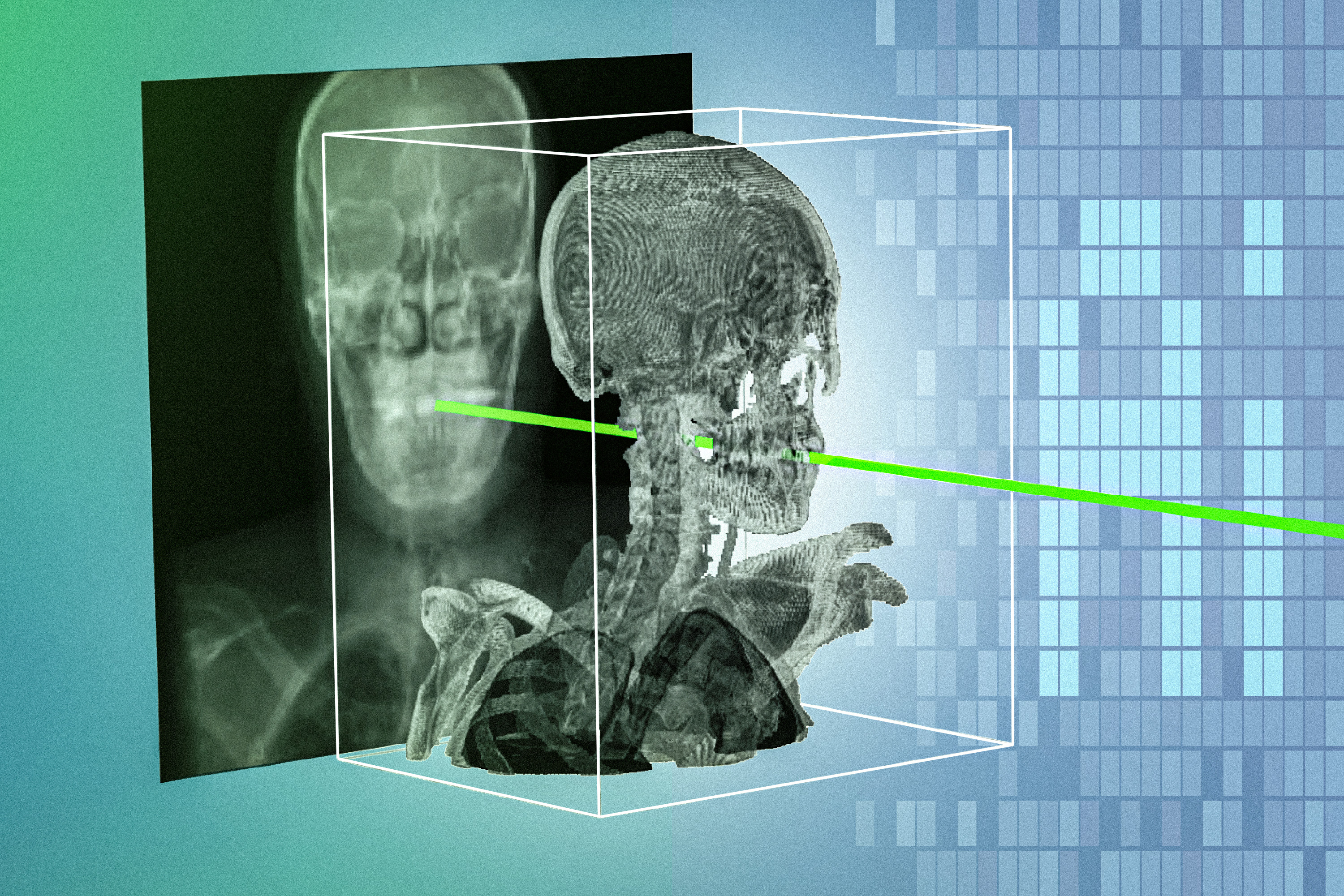
This patient-specific method, called xvr, helps doctors use X-rays for surgical navigation in fields such as orthopedics and neurosurgery.

This interactive webinar will introduce the different types of AI, address the concerns with AI, share how we IBM are approaching Responsibl…

Naoki Egami has become a standout in political methodology, helping refine tools that give scholars durable results.

On 25 August, OpenAI fully unveiled Jalapeño, the company’s debut AI accelerator chip. Jalapeño delivers up to 13.4 petaflops of 4-bit compu…

The “HardFlow” algorithm could help generative AI models produce high-quality outputs that obey strict requirements when “pretty close” does…

AI-powered cameras dot streets across the world, equipped with the power to identify faces or vehicle license plates. But a public backlash …

Atlas Building Composites is commercializing MIT research to turn plastic waste into parts for buildings and other infrastructure.

Maybe you heard about the AI-controlled vending machine that stocked underwear and live fish. Or the AI manager of a San Francisco store tha…

The handheld catheterization device AI-GUIDE, created by Lincoln Laboratory and Massachusetts General Hospital, promises improved health ou…

On 11 August, Anthropic announced that all future Claude models will generate text that contains a watermark that identifies its results as …

A weeklong summer workshop brought higher education faculty to campus to explore how AI and machine learning materials can be adapted for th…

In the first weeks of July, a wave of sad posts rolled through Chinese social media, as people lamented friends and lovers they were about t…

AI coding tools can now generate thousands of lines of code in minutes, helping companies build features, run tests, and fix issues faster. …

DNA is often explained as a codebook or set of instructions for producing proteins, and ultimately, life. Some stretches of DNA, called gene…